 Eviory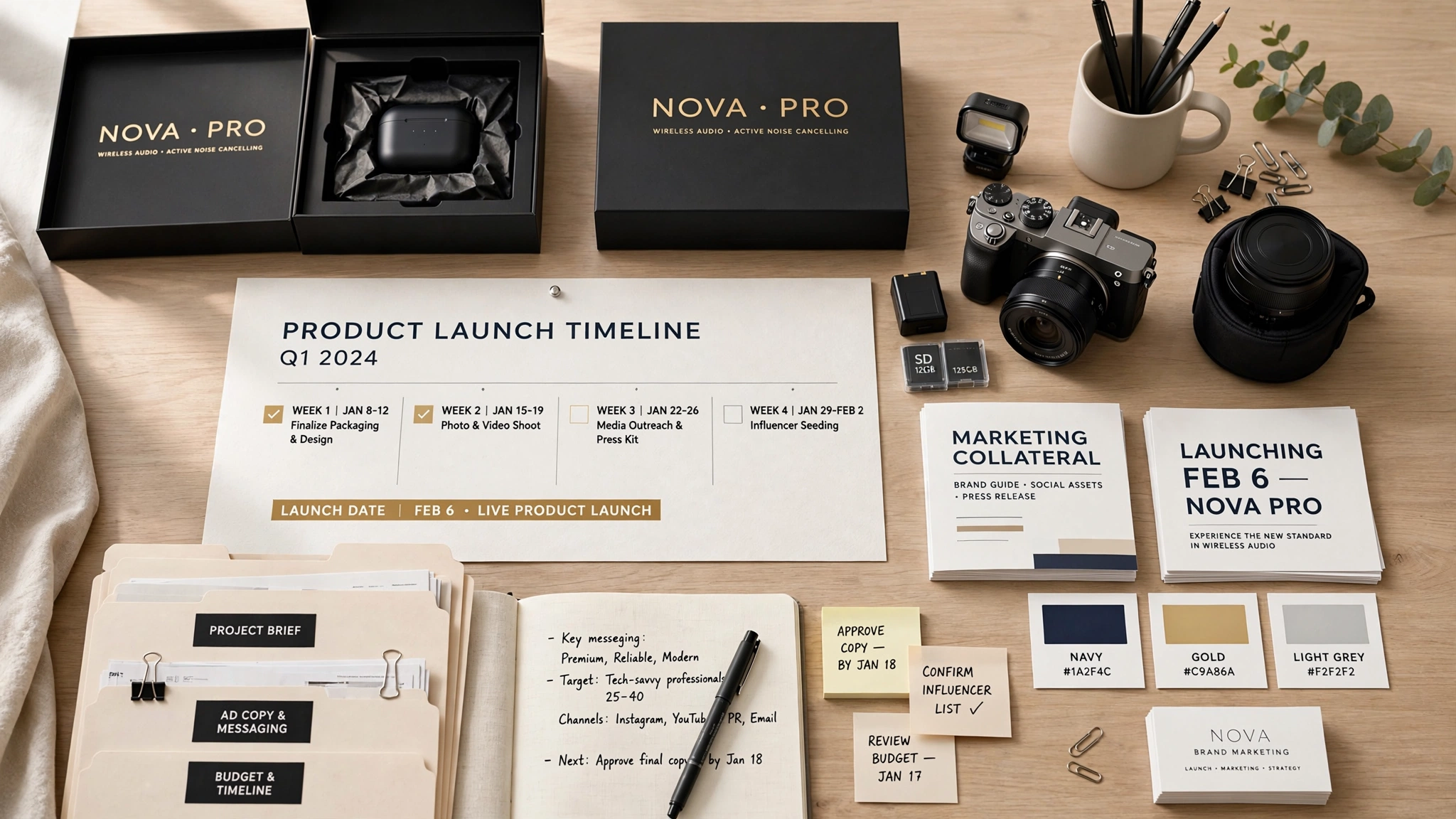
Quick Answer: A profitable product launch is executed in four distinct phases: Data Gathering (pre-launch research), High-Intent Waitlist (capturing leads), Scarcity Trigger (launch execution), and Post-Launch Stabilization (converting late adopters). Brands that utilize this formal, systemic approach see significantly higher success rates than those relying on impromptu announcements.
The difference between a launch that sells out in two hours and a launch that barely covers the cost of production is rarely the quality of the product itself. The difference lies entirely in the execution of the launch strategy.
Bosku, launching a product without a systemic framework is a fast track to holding dead inventory. The most successful brands in the world do not treat launches as an art form; they treat them as a rigorous engineering problem. They do not guess what the market wants; they manufacture the demand through a carefully orchestrated sequence of events.
Launching is an Engineering Problem, Not an Art Form
The data regarding product launch success strongly supports the necessity of a structured approach. While the general market sees failure rates between 80% and 95%, companies classified as “Innovation Leaders”—those with formal, repeatable processes—achieve an average success rate of 76%. In stark contrast, firms without these processes languish at a 51% success rate or worse.
Furthermore, organizations that implement a formal go-to-market (GTM) strategy see, on average, 10% higher launch success rates and three times greater revenue growth than those using ad-hoc, impromptu approaches. If you want a profitable launch, you must adopt the framework.
Phase 1: The Warm-Up and Data Gathering
The launch begins weeks before the actual product is available for purchase. The objective of Phase 1 is twofold: to softly condition the audience to the problem your product solves, and to gather data on their specific pain points.
During this phase, you are not aggressively pitching the product. Instead, you are initiating conversations. You use Instagram Stories polls to ask about their struggles. You post educational content highlighting the exact issue your upcoming product addresses. You are essentially testing the waters and refining your marketing angles based on real-time feedback. The data gathered here dictates the messaging for the rest of the campaign.
Phase 2: The High-Intent Waitlist
Phase 2 is the most critical component of the entire launch. Your sole focus is transitioning interested prospects from social media platforms into an owned communication channel, specifically a waitlist via email or SMS.
A waitlist acts as a pressure cooker for demand. By requiring the customer to take a micro-action (entering their email), you filter out the passive observers and identify the high-intent buyers. You must incentivize the waitlist heavily—offer early access, an exclusive discount, or a limited-edition gift with purchase. The conversion rate of your waitlist on launch day will be significantly higher than the conversion rate of your general social media audience. If you fail to build a waitlist, your launch is entirely dependent on the algorithm’s whims on opening day.
Phase 3: The Scarcity Trigger
Phase 3 is the execution day. This is when the cart opens, and the accumulated pressure is released. The defining characteristic of this phase is the aggressive deployment of urgency and scarcity.
You do not simply announce that the product is available. You open the cart exclusively to the waitlist first, creating a VIP experience and rewarding their early commitment. Once the general launch begins, your messaging must transition from educational to transactional. You must clearly communicate the limited nature of the opportunity. Whether it is limited inventory, a time-sensitive discount, or an expiring bonus, the customer must feel a compelling reason to purchase right now rather than tomorrow.
Phase 4: The Post-Launch Stabilization
The launch does not end when the initial surge of sales subsides. Phase 4 focuses on capturing the “late adopters” and maximizing the total revenue of the campaign.
In the days following the launch, you must leverage the social proof generated during Phase 3. Share screenshots of enthusiastic customer messages, repost unboxing videos, and highlight any products that have sold out. You must also implement aggressive retargeting campaigns targeting individuals who visited the product page but did not convert. The goal is to stabilize the sales velocity and clear out any remaining inventory before transitioning back to standard operational marketing.
Centralizing Your Launch Operations
Executing a four-phase launch sequence requires meticulous organization. If you are attempting to manage waitlists in one app, email sequences in another, and content calendars in a spreadsheet, the friction will inevitably lead to costly errors.
To engineer a predictable, profitable launch, you must centralize your entire go-to-market strategy into a single command center. Stop relying on fragmented tools. Implement a robust operational framework by exploring the Eviory OS Master Workspace. Streamline your assets, manage your phases effectively, and ensure your next product drop is a resounding success.